.webp)

Periodontal CareIn Traverse City, MI
If you’re noticing signs of gum disease, you’re not alone. Gingivitis and periodontitis are more common than you think. The good news? We're here to help you take back control of your smile.
Do I really need periodontal care?
If your gums are swollen, bleed easily, or you’re experiencing discomfort, it is imperative to schedule an appointment with our experienced oral healthcare providers to evaluate your periodontal health. Treating gum disease early can help protect your natural teeth and prevent long-term damage. Left untreated, it can lead to tooth loss and serious oral health issues. The sooner we catch it, the better the outcome.

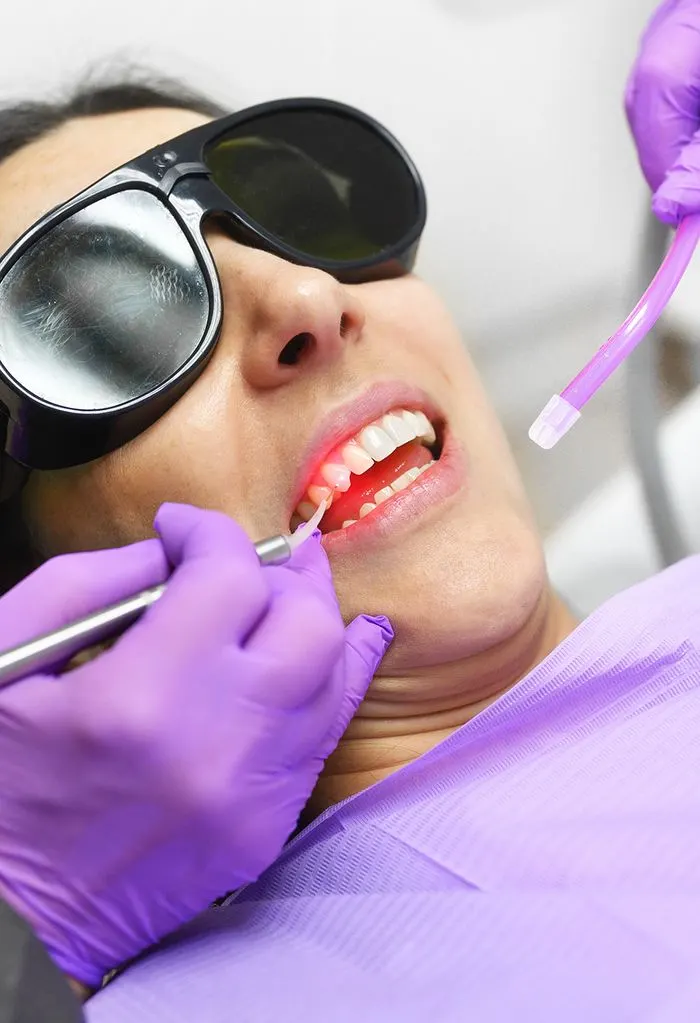
Gentle Treatment With Laser Therapy
With laser technology, we are able to offer gum disease treatment that is more comfortable than ever before. Laser therapy is a non-surgical treatment that effectively removes harmful bacteria from under the gums and promotes healthy tissue regeneration.

The Benefits of Periodontal Care
Restore Gum Health
With early intervention, we can stop gingivitis in its tracks and bring your gums back to a healthy state.
Stop Progression
Regular deep cleanings and maintenance help prevent bacteria from building up again, protecting your gums long-term.
Avoid More Invasive Treatment Later
Catching gum disease early can prevent the need for surgical procedures and advanced treatments like grafts or implants.
The Deep Cleaning Process
Periodontal Charting & Patient Education
Every successful periodontal treatment plan begins with a clear understanding of your gum health. During your exam, we create a detailed chart by measuring the pocket depths around each tooth and noting any areas of inflammation or bleeding. This information gives us a precise picture of where disease is present and how advanced it may be. Just as important, we take time to walk you through the findings, explain what they mean, and answer your questions. This way, you’re fully informed and ready to partner with us in the next stages of your care.
Scaling & Root Planing
Using precise ultrasonic instruments, like the Cavitron, one of our highly skilled Registered Dental Hygienists will remove the buildup of plaque and tartar that has accumulated around and under your gums. This is called “scaling.” These deposits are what allow bacteria to thrive and cause gum disease. After scaling, we move to “root planing,” which smooths the surfaces of the tooth roots. This helps your gums reattach to the teeth more securely and reduces the risk of future bacterial buildup by eliminating the rough surfaces where bacteria can hide.

Antibiotic Treatment
Following removal of the plaque and calculus buildup, we may apply a localized antibiotic directly into the pockets around your teeth. In some cases, we’ll also prescribe a take-home rinse or oral antibiotics to continue fighting the infection. These treatments are chosen based on your unique oral health needs. Antibiotics help reduce inflammation, encourage healing, and lower your risk of reinfection, especially in the days following your deep cleaning.
Before & Afters
A smile is worth 1,000 words.
See real patient success stories.


Upper Arch Reconstruction
Decay and chipping were affecting Colton's upper teeth. After personalized periodontal treatment and root canals to preserve natural teeth, we rebuilt his smile with precision CEREC crowns to provide a stable, long-lasting restorative solution.
FAQs
Frequently Asked Questions
Check out these frequently asked questions, or call us to speak with our team.
Gum disease progresses through three main stages. It starts with gingivitis, which is the only stage that’s reversible. At this point, your gums may bleed when you brush, feel tender, or appear red and puffy—but no permanent damage has occurred yet. If not treated, it can progress to periodontitis, where the infection begins to damage the structures that support your teeth, leading to gum recession, sensitivity, and bone loss. The most severe form is advanced periodontitis, which can result in deep gum pockets, loose teeth, or even tooth loss. Early detection and treatment are key to preventing long-term damage.
Not exactly. Gum disease itself isn’t contagious like a cold or the flu. It’s caused by harmful bacteria that already exist in the mouth. However, it is possible for those bacteria to be transferred through saliva—like sharing utensils or kissing—especially if one person has poor oral hygiene. Even so, just having the bacteria doesn’t mean you’ll get gum disease. Factors like oral care habits, genetics, and immune health play a much bigger role in whether or not the disease develops.
Gum disease is caused by the buildup of bacteria-laden plaque and tartar on your teeth, especially around and beneath the gum line. When this buildup isn’t removed regularly through brushing, flossing, and professional cleanings, it triggers an inflammatory response that damages your gum tissue. Other contributing factors include smoking, diabetes, stress, hormonal changes, and even your genetics. That’s why even people with good oral hygiene can sometimes struggle with gum issues if they have a family history of periodontal disease. Early diagnosis and ongoing maintenance are key to preventing serious damage.